
Healthcare Data Analytics: Understanding Methods, Tools, And Use Cases

Healthcare data analytics refers to the systematic use of clinical, administrative, and operational data to generate insights that inform care delivery, resource planning, and population health monitoring. The field combines structured data (such as diagnosis codes, lab results, and billing records) with unstructured sources (clinical notes, imaging metadata) and applies methods from statistics, data engineering, and machine learning to produce interpretable outputs. Emphasis typically falls on interoperability, data quality, and reproducible workflows so that findings may be audited and integrated back into clinical or administrative systems.
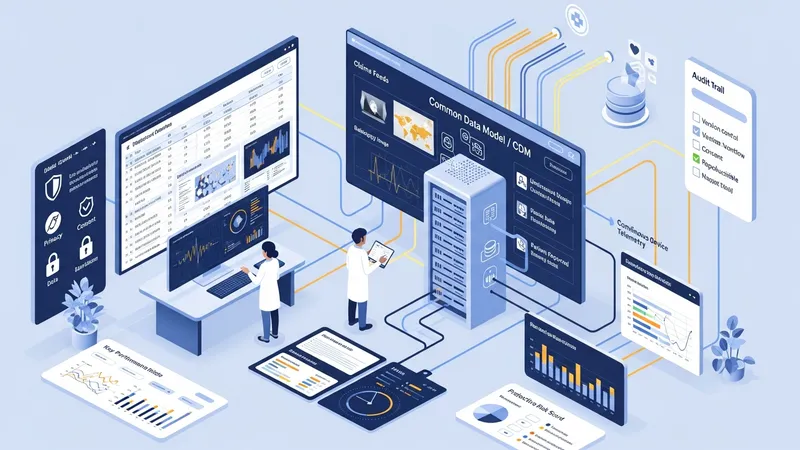
Implementations of healthcare data analytics often involve pipelines for ingesting electronic health record (EHR) extracts, claims feeds, device telemetry, and patient-reported outcomes. These inputs usually require normalization to common data models or standards before analysis. Analytical outputs can range from near-term dashboards that show operational performance to predictive scores that estimate clinical risk. Throughout, considerations of privacy, consent, and regulatory compliance are commonly present in planning and execution rather than treated as optional features.
- HL7 FHIR — a widely referenced interoperability standard for exchanging clinical and administrative healthcare data, often used to structure EHR-derived information for analytics.
- Apache NiFi — an example of an extract-transform-load (ETL) and data flow platform that may be used to move, transform, and route healthcare data streams into analytic stores.
- scikit-learn — an open-source machine learning library commonly applied for prototyping predictive models, feature selection, and validation workflows in healthcare analytics projects.
Data collection and integration form the foundation of analytics efforts. In practice, teams may map disparate source schemas to common data models and apply validation rules to detect missing or inconsistent values. Standard formats such as FHIR can simplify mapping for exchangeable clinical content, while ETL platforms may automate routine transformations. These steps often influence downstream model performance and reporting accuracy, so planners typically allocate significant effort to profiling and cleansing incoming data before analysis begins.
Visualization and reporting convert processed data into formats that operational and clinical stakeholders can interpret. Business intelligence tools may render time-series charts, cohort tables, and heat maps that summarize utilization, quality, or capacity. Effective dashboards tend to emphasize clear labeling, refresh cadence aligned with decision cycles, and filters that allow disaggregation by relevant dimensions. Visualization choices can shape how findings are understood and therefore how they are acted upon within care teams and administrative units.
Predictive analytics and machine learning are applied cautiously in healthcare contexts to estimate outcomes such as readmission risk, deterioration likelihood, or expected utilization. Model development workflows typically include feature engineering, cross-validation, and calibration steps to assess reliability and potential bias. External validation on separate data and documentation of model assumptions may often be necessary before models are considered for operational use. Clinical interpretability and alignment with existing care pathways are common factors that affect adoption.
Operational and quality measurement use cases often rely on consistent definitions and reproducible methodologies. Examples include measures for readmission rates, length of stay trends, procedure utilization, and adherence to clinical guidelines. Analytics teams may produce routine reports that support quality improvement cycles and accreditation reporting. Measurement frameworks usually specify numerator/denominator logic, inclusion criteria, and time windows so that comparability is maintained across reporting periods.
In summary, healthcare data analytics encompasses data capture, integration, visualization, predictive modeling, and measurement practices aimed at supporting care and operations. Projects may involve interoperable standards like FHIR, ETL platforms for flow management, and machine learning libraries for predictive work, and each component typically requires attention to data quality, governance, and interpretability. The next sections examine practical components and considerations in more detail.