
Google Explore Car Insurance: Introduction To Research Strategies For Understanding Costs And Coverage Needs

Car insurance research strategies involve systematic steps to understand how coverage options, costs, and policy features interact. This concept refers to methods for gathering and comparing information about liability limits, collision and comprehensive coverage, deductibles, premium drivers, and the practical steps insurers take during claims assessment. The goal of the research approach is to clarify which elements of a policy influence cost and protection levels so that an individual can form an informed view of coverage trade-offs without relying on promotional material or sales language.
Research strategies typically combine primary sources, such as policy documents and insurer rate filings, with secondary sources like consumer guides and regulatory publications. These methods may include structured comparison of declarations pages, review of exclusions and endorsements, analysis of how vehicle use and driving history can affect premiums, and assessment of claims handling practices. The focus remains descriptive: identifying what information exists, how it is presented, and which policy features commonly affect cost and outcomes.
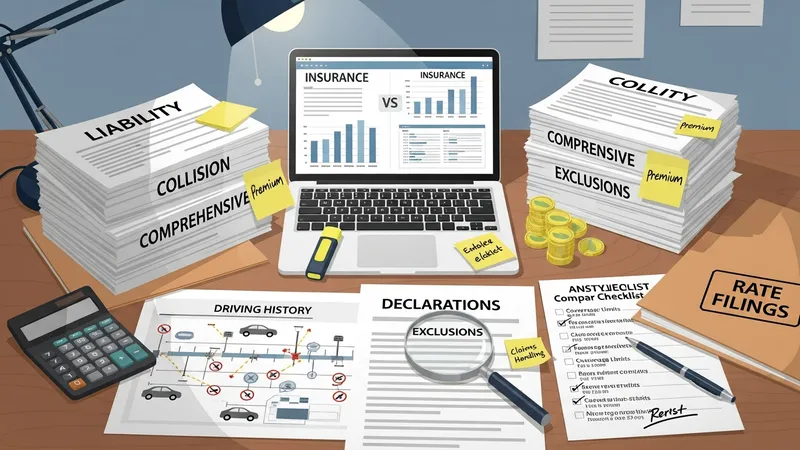
- Comparison platforms and summary tools: Aggregators and comparison sites may summarize policy features and premium estimates. These tools can provide side-by-side views of coverage elements but often use simplified assumptions that should be checked against full policy text.
- Primary policy documents and declarations pages: The written policy, endorsements, and the declarations page show specific limits, deductibles, and exclusions. Reviewing these documents can clarify the precise contract terms that determine coverage and claims outcomes.
- Regulatory and consumer information sources: Official regulator pages and consumer protection resources often explain required minimums, complaint processes, and common consumer questions. These sources may include averaged or typical figures for premiums and loss frequency for public reference.
When comparing coverage types, it may help to categorize policy elements into liability protection, first-party coverage (collision and comprehensive), and ancillary features such as rental reimbursement or roadside assistance. Liability protection typically specifies bodily injury and property damage limits that may range numerically depending on jurisdictional minimums and personal preference. First-party coverages often include deductible choices that trade lower premiums for higher out-of-pocket cost at claim time. Assessing these categories side-by-side can reveal common trade-offs without asserting any single configuration as universally preferable.
Premium cost drivers often include vehicle value, use patterns, driving record, and location-related risk factors. For many drivers, age of the vehicle and security features may influence comprehensive and collision rates, while annual mileage and primary use (commuting versus recreational) may be reflected in underwriting questions. Insurers typically use historical loss data and actuarial models to set rates, so observed price ranges may vary widely across markets and over time; research should therefore consider multiple recent quotes or rate filings when forming conclusions.
Deductible selection and liability limit choices can meaningfully affect premium estimates and potential out-of-pocket exposure. A higher deductible commonly reduces a premium estimate but increases the cost at the time of a claim; liability limits determine the insurer’s contractual responsibility for third-party losses. Careful review of how deductibles apply—for example, whether they are per-claim or per-incident—and whether limits are per-person or per-incident can change a practical understanding of coverage levels during research.
Understanding the claims process is an important research component because policy wording, claim reporting windows, and insurer repair or settlement practices may influence real-world outcomes. Public complaint records and regulatory summaries may give insight into processing timelines and common dispute areas. Research that includes sample claim scenarios and how different policies would respond to those scenarios can provide practical context without prescriptive recommendations.
In summary, researching car insurance costs and coverage needs means combining primary policy review, comparison tools, and regulator or consumer resources to build a rounded understanding of how premiums, deductibles, liability limits, and policy features interact. The approach emphasizes careful reading of policy language, cross-checking simplified summaries, and noting common cost drivers. The next sections examine practical components and considerations in more detail.