
Go High Level AI: Smarter Automation For Modern Businesses

Integration and data flow in smarter automation
Integration patterns are foundational to smarter automation because they determine how data moves between CRM, marketing, and communication tools. Common connectors include RESTful APIs, webhooks for event notifications, and message queues for decoupled processing. Mapping and transformation steps often standardize formats and normalize identifiers so that a customer record can be recognized across systems. Data synchronization cadence—real-time, near-real-time, or batch—may be chosen according to use case sensitivity and system load, and teams typically document trade-offs to guide implementation decisions.
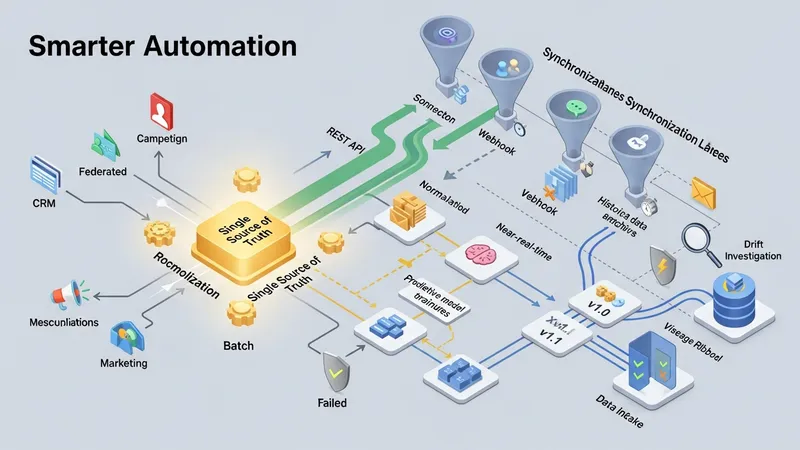
When designing data flows, attention to master data management often improves consistency. A single source of truth or a federated approach with reconciliation rules can reduce duplicate work and misrouted activities. Data validation and schema checks at ingestion points can prevent downstream workflow failures. Where predictive models are applied, training data pipelines usually include versioning and data lineage so that model inputs are reproducible and any drift can be investigated against historical records.
Latency and reliability considerations may influence whether automation takes synchronous paths (instant responses) or asynchronous paths (delayed processing). For high-touch interactions such as conversational handoffs, maintaining session context across systems can be critical; for backend batch updates, idempotent operations and retry policies often help maintain integrity. Monitoring for integration errors and implementing circuit breakers or fallbacks to safe states are commonly used safeguards to reduce operational disruption.
Security and access control should be applied consistently across integrations. Role-based access, token-based authentication, and scoped credentials can limit exposure if a connector is compromised. Encryption in transit and at rest and strict logging of integration actions help meet compliance expectations and support incident response. These considerations often guide decisions about whether to use third-party integration platforms, custom middleware, or native connectors offered by vendors.