
Fraud Protection Services: How Monitoring And Alerts Help Reduce Risk

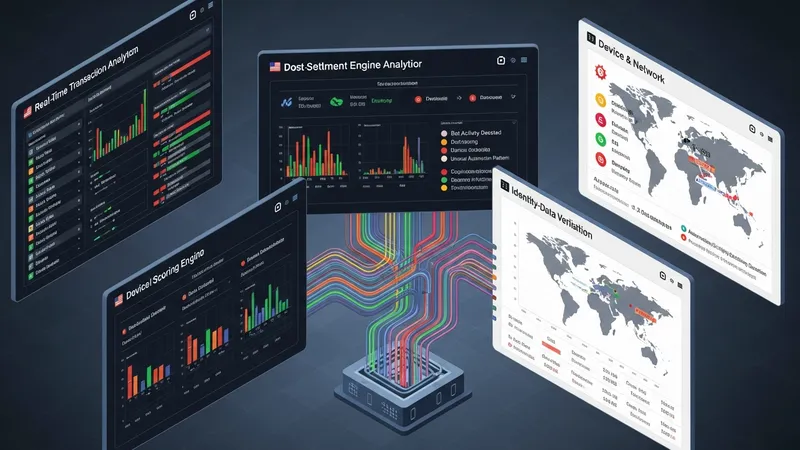
Types of Monitoring Used by Fraud Protection Services
Monitoring approaches vary by channel and use case and commonly include transaction-level monitoring, account-behaviour monitoring, device and network monitoring, and identity-data checks. Transaction monitoring inspects payment authorizations and settlement records for atypical patterns, while account-behaviour monitoring tracks login frequency, credential changes, and unusual access patterns. Device and network monitoring capture IP reputation, device fingerprinting, and browser characteristics to detect automation or spoofing. Identity-data checks compare supplied attributes to consumer-reporting and verification services to surface inconsistencies. In the United States, these distinct monitoring categories are often combined to create complementary signals that feed scoring engines and alerting rules.
Transaction monitoring systems used by U.S. financial institutions may operate at different latencies: some work in milliseconds during authorization flows, others run batch analytics on settled transactions to detect organized fraud rings. Authorization-time systems often rely on lightweight models or pre-computed rules to avoid transaction latency, while post-settlement analytics can use more computationally intensive methods. Practitioners typically balance the need for rapid decisions with model complexity, and many institutions maintain separate models for authorization and post-settlement surveillance to address these constraints.
Device and behavioural monitoring may incorporate passive signals that do not require explicit customer interaction. Examples include assessing device integrity, identifying emulated environments, and measuring typing cadence or gesture patterns in mobile apps. These signals can be useful for detecting credential stuffing or automated scripts that attempt account takeover in the U.S. market. Organizations often treat these signals as probabilistic indicators and combine them with transactional risk scores to reduce false positives while preserving detection capability.
Identity-data checks draw on consumer-reporting agencies, government-issued ID verification, and third-party identity graphs. In the United States, many institutions reference consumer-reporting or verification services when onboarding customers or when elevated-risk transactions occur. Legal frameworks such as the Fair Credit Reporting Act influence permissible uses and retention practices for certain identity checks. As a consideration, practitioners often document data sources and retention policies to align monitoring practices with compliance expectations and audit requirements.