
Financial Advisors And Wealth Management: Understanding Roles, Services, And Planning Strategies

Types of advisors and primary roles in the United States
Advisors in the U.S. commonly fall into categories that reflect qualifications, regulatory registration, and business model. Registered Investment Advisers (RIAs) register with the SEC or state regulators and file Form ADV, which discloses services, fees, and conflicts. Broker-dealers and registered representatives operate under FINRA supervision and provide brokerage services subject to suitability standards; clients can review broker records via FINRA’s BrokerCheck. Credentialed planners such as CFP certificants have a specific syllabus and code of ethics maintained by the CFP Board, which may be relevant when seeking comprehensive planning skills.
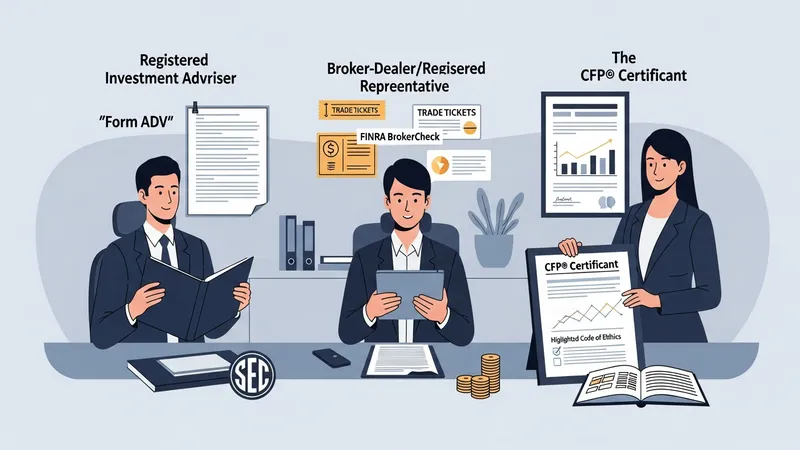
Differences in legal obligations are material to client relationships. An RIA may be subject to a fiduciary standard under SEC rules when providing personalized investment advice, meaning the adviser must act in the client’s best interest as defined by applicable rules. Broker-dealers typically must recommend suitable transactions but are regulated differently. These distinctions can affect disclosure, permissible compensation structures, and how conflicts are managed. Prospective clients often review regulatory filings and professional credentials to assess these factors.
Firm size and operational model influence available services and specializations. Large wealth management firms may provide integrated services including trust administration, estate planning referrals, and tax coordination, whereas independent advisors may focus on planning and outsourced portfolio management. Some banks and brokerage firms offer in-house advisory teams that coordinate custodial and lending products alongside investment advice. Understanding these structural differences may help clients match service scope to their needs and complexity.
Practical considerations when evaluating advisor types include asking for client references, reviewing regulatory records via SEC EDGAR or FINRA, and requesting copies of Form ADV and any written agreements. These documents often describe disciplinary history, fee schedules, and whether the adviser has discretionary trading authority. In the U.S., these sources are publicly accessible and can be used as part of an informed assessment of qualifications and potential conflicts rather than as definitive guarantees of future outcomes.