
Electronics Clearance: Key Factors That Influence Pricing And Product Selection

Pricing mechanics and markdown sequencing for electronics clearance
Common markdown sequences start with a modest reduction and escalate if sell-through remains insufficient. A staged sequence may involve an initial small percentage reduction, followed by larger drops at set intervals or when inventory thresholds persist. The precise timing and depth are influenced by carrying costs, the retailer’s margin strategy, and expected demand sensitivity. Some retailers use algorithmic pricing that factors in competitive listings and historical elasticity, while others follow fixed calendar-driven markdown schedules tied to promotional windows.
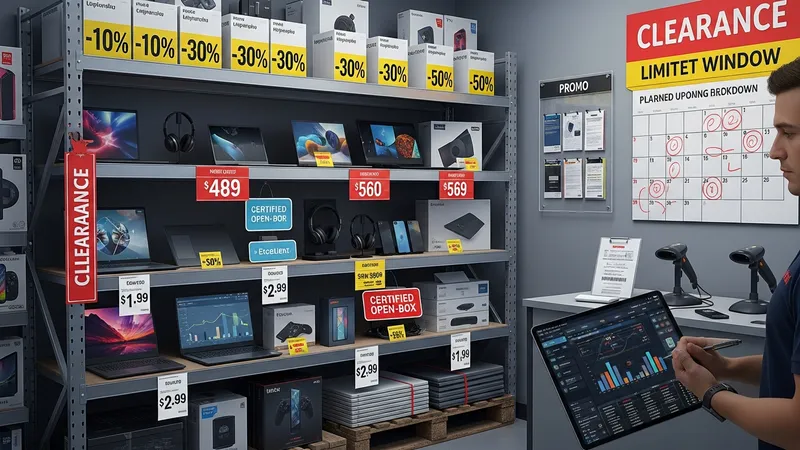
Bundle and open-box pricing are frequent mechanisms to clear items without reducing unit price severely. Combining a slower-moving item with a higher-demand accessory or offering certified open-box pricing can change the perceived value proposition. Retailers must account for warranty liabilities and return rates when establishing such pricing. Transparent condition descriptors and clear return policies for open-box items can affect buyer confidence and thus the effectiveness of these pricing approaches.
Liquidation and secondary-market pricing are alternative mechanisms for clearing inventory that may not perform through retail channels. Retailers sometimes sell batches to wholesalers or liquidation platforms, which typically accept lower per-unit prices but reduce handling and storage overhead. The decision to liquidate versus markdown for direct sale is often based on expected net recovery after channel fees, logistics costs, and the time value of clearing inventory.
Discount depth is also affected by supply chain factors, including incoming shipments of replacement units and forecasted future demand. If a significant replenishment of a newer model is imminent, retailers may accelerate markdowns on older stock to ensure shelf space is available. Conversely, if supply constraints are expected for a category, markdowns may be more conservative. These supply-side considerations interact with demand signals to calibrate markdown depth and timing.