
EDC In Clinical Research: Understanding Electronic Data Capture Systems And Their Role In Trials

Electronic data capture systems are software platforms used to collect, store, and manage data generated during clinical studies. These systems replace or supplement paper case report forms by providing structured electronic forms, a central database, and role-based user access. Typical EDC implementations include mechanisms for recording subject visits, entering laboratory and clinical measurements, and tracking protocol-defined assessments in a way that aims to improve traceability and reduce transcription errors compared with manual entry processes.
An EDC environment usually comprises form design tools, validation logic, query management, and reporting modules. It may support secure web access for sites and monitors, configurable user permissions, and export capabilities for statistical analysis. Implementations can vary by architecture (on-premises versus cloud-hosted), intended study phase, and the degree of integration with other clinical systems such as laboratory information or trial management tools.
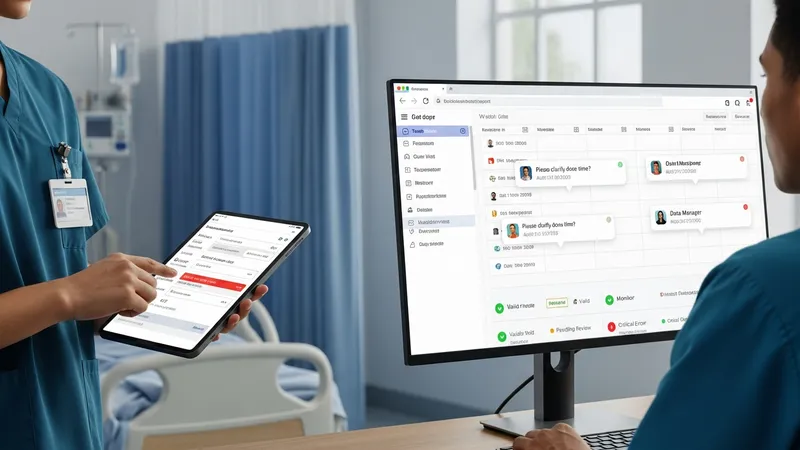
- Electronic case report form (eCRF) templates — structured digital forms that mirror protocol data requirements and may include conditional fields, skip logic, and coded value sets.
- Cloud-based EDC platforms — hosted systems that provide centralized databases, form designers, and common tools for query tracking and reporting; these platforms may support multi-site access and role-based controls.
- Mobile and remote data capture methods — tablet or smartphone interfaces and patient-reported outcome modules that can collect data directly from participants between visits or in decentralized trial designs.
Data validation within an EDC may include real-time edit checks, range checks, and cross-field consistency rules. Such checks can identify implausible entries at the point of data entry and generate automated queries for site staff to resolve. Validation rules typically reflect protocol requirements and statistical expectations, and may be adjusted during the study as queries reveal patterns that require refinement. These mechanisms can often reduce downstream data-cleaning time, though they usually require thoughtful configuration and maintenance.
Study workflow management in an EDC can cover visit scheduling, electronic signatures, and task assignment. Randomization modules or integrations with interactive response technologies may be used to allocate subjects per protocol. Operational features often track monitoring activities and query resolutions, providing oversight for data completeness and timeliness. Workflow tools can also help coordinate multi-center studies by providing centralized views of enrollment status and outstanding data queries.
Regulatory compliance considerations often shape EDC design and operation. Systems may include immutable audit trails that record who changed a data value, when, and why, together with secure authentication and access controls. Adoption of industry standards for data structure and exchange, such as standardized metadata models, can help align trial datasets with regulatory and analysis expectations. Documentation of system validation and user training records commonly forms part of regulatory inspection materials.
Integration and interoperability are frequent topics when assessing EDC fit for a study. EDC systems may export data in standard formats or provide APIs for connection to electronic health records, laboratory systems, or clinical trial management systems. Mapping and transforming data to analysis-ready structures may be necessary, and planning for metadata, code lists, and provenance can reduce rework at the analysis stage. Technical and governance considerations often dictate the scope and timing of integrations.
In summary, electronic data capture systems serve as central platforms for structured clinical study data collection, validation, and management. They combine form design, data validation, workflow controls, and audit capabilities to support clinical operations and data quality. Subsequent sections examine practical components and considerations in more detail, including form design, validation practices, operational workflows, integration approaches, and closeout processes.