
Destination Weddings: Evaluating Locations, Venues, And Local Requirements

Venue types, capacity planning, and on-site services
Venue types commonly considered for celebrations away from home include resorts with integrated hospitality services, standalone private estates, and municipal or historic properties. Resorts often provide bundled services such as catering, accommodation blocks, and on-site coordinators; private estates may offer greater privacy but usually require external vendor coordination and temporary infrastructure. Municipal or historic venues can have distinct booking rules and restrictions intended to protect public or heritage assets, and these may affect allowable décor or catering arrangements.
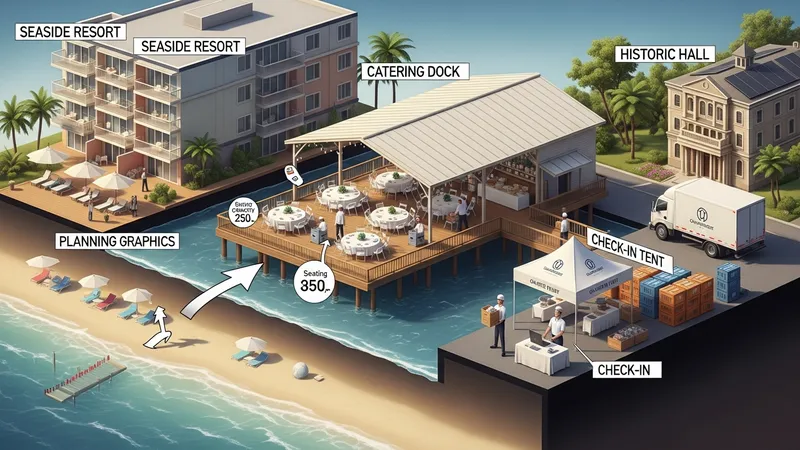
Capacity planning involves assessing seated and standing limits, kitchen and service access, and staging areas for vendors. Venues with fixed seating or narrow service corridors may limit layout flexibility and increase labor time for setup. Outdoor spaces often require temporary structures for weather protection and may need approval for anchoring or ground impact. Considering venue flow—arrival points, restroom proximity, and catering staging—can influence guest movement and timing for event segments.
On-site services such as catering certification, sound systems, lighting, and housekeeping availability can reduce the number of external vendors required. Some venues may maintain exclusive supplier lists or insurance requirements for third-party contractors. Reviewing these service conditions typically helps align expectations for what the venue will provide versus what needs to be sourced externally, and may affect timelines and contractual details.
Preservation rules and venue-specific policies often shape permissible decorations, open flames, and amplified music. Historic properties frequently restrict nailing or drilling into structures and may require protective floor coverings; public venues can have curfews or noise limits enforced by local ordinances. Understanding these policies in advance may reduce the need for last-minute adjustments and can inform choices about staging and entertainment that accommodate venue constraints.