
Destination Weddings: Evaluating Locations, Venues, And Local Requirements

Planning a wedding away from a couple’s usual residence involves selecting a remote or out-of-town site, assessing available event spaces, and understanding the administrative or practical steps required by the host location. This process typically covers the choice of geographic setting (coastal, urban, rural, mountain), an appraisal of venue types (dedicated event spaces, hotels, private estates), and identification of local rules that affect ceremonies and receptions. The concept centers on aligning venue characteristics with travel logistics, guest needs, and any local permissions that may be required.
Key considerations include seasonal weather patterns, local vendor availability, language and cultural norms, and transportation infrastructure. Planners and couples often review venue capacity, on-site services (catering, accommodation, accessibility), and nearby lodging for guests. Understanding local regulations—such as marriage license requirements, noise ordinances, or permit needs for public spaces—can influence the choice of location and the timeline for confirmations and vendor contracts.
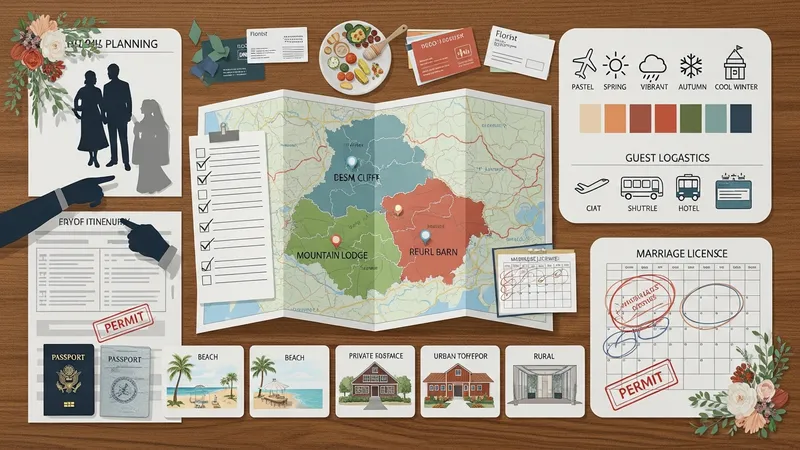
- Seaside resort venues — Typically offer dedicated event lawns or ballrooms, on-site accommodation options, and a range of vendor partnerships; may require coastal permits for ceremonies held on public beaches.
- Historic estates or private villas — Often provide distinctive architecture and private grounds with restricted guest capacity and specific rules for preservation, which can affect décor and setup.
- Urban hotels and rooftop venues — Frequently located near airports and transit, with built-in hospitality services; may involve municipal rules for rooftop events and limits on amplified sound.
When comparing locations, climate and seasonality often affect ceremony timing and contingency planning. Coastal settings may require wind and storm contingencies, while mountain sites can present temperature and access variability. Venues in urban cores can provide shelter from weather but may have stricter permitting and curfew rules. These environmental and regulatory differences typically influence vendor choices, contract terms, and potential extra costs for weatherproofing or transport.
Evaluating venue capacity and layout is an operational step that may determine the guest list and flow of the event. Indoor venues often include fixed facilities such as kitchens or staging areas, while outdoor sites may need temporary infrastructure (tents, portable restrooms, generators). Accessibility for guests with reduced mobility and local availability of equipment rental can affect suitability. Layout considerations can also guide decisions about ceremony placement, reception seating, and logistics for vendors.
Budgeting for a destination celebration can vary based on travel distances, accommodation needs, and local pricing structures for services. Travel and lodging may represent a significant portion of overall expenses for hosts and guests, and vendors in some areas may charge surcharges for travel or out-of-area service. Currency exchange and local tax regimes can introduce variability, so financial planning often accounts for contingencies and potential permit fees without assuming fixed outcomes.
Local legal and administrative requirements often shape the schedule and paperwork needed before a ceremony. Some jurisdictions may require residency periods, affidavits, or translated documents; others rely on civil or religious officials with specific credentials. Early inquiry into local marriage processes, permit lead times, and the need for witnesses can reduce last-minute complications. Engaging a local contact or coordinator may help interpret requirements, though reliance on local expertise should be considered a practical option rather than a guarantee of outcomes.
In summary, planning a celebration away from a usual residence involves coordinated assessment of setting, venue features, and the local administrative landscape. The factors addressed here—environmental conditions, venue logistics, budgeting variables, and legal requirements—often interact and may influence one another. The next sections examine practical components and considerations in more detail.