
Cyber Security For Firms: Key Principles For Protecting Business Data

Data Encryption, Backup, and Storage Considerations for Business Data
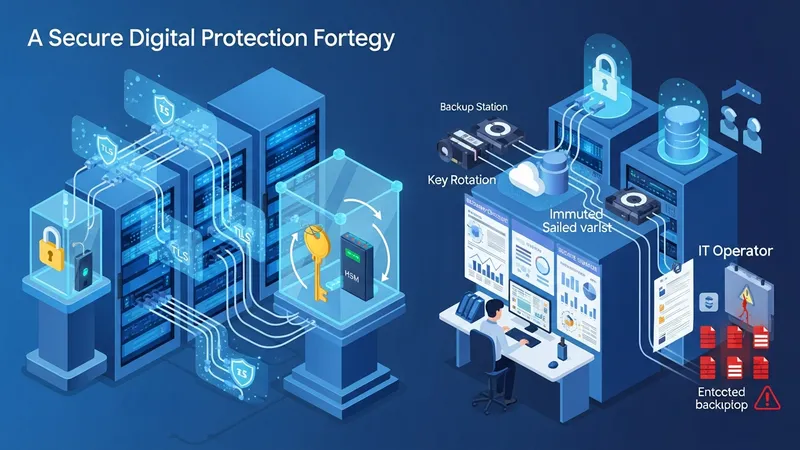
Cryptographic controls are commonly used to protect data confidentiality during transmission and while at rest. Transport Layer Security (TLS) is often used for data in transit, while disk or file-level encryption protects stored data. Key management practices—such as separation of keys from encrypted data, controlled access to key material, and periodic rotation—typically influence the effectiveness of encryption. Organizations may weigh the complexity of key lifecycle management against the sensitivity of the data to determine appropriate cryptographic adoption.
Backup strategies commonly reflect recovery time and recovery point objectives set by the business. Frequent backups and tested recovery procedures can reduce downtime when incidents occur, although they do not remove the need for other controls to prevent initial compromise. Backup integrity checks and isolation mechanisms—such as immutability or offsite copies—may reduce the risk that backups become corrupted or encrypted by attackers. Decisions about retention durations and restore priorities typically reflect legal, contractual, or operational needs.
Storage architectures can influence protection approaches. Centralized storage systems may simplify access controls and monitoring, while distributed storage models can require more granular controls across locations. Cloud-based storage services typically offer built-in encryption and access controls that can be leveraged, but the responsibility model varies and often requires configuring controls correctly. Considerations include evaluating default settings, ensuring encryption keys are managed according to policy, and verifying that backups are not inadvertently exposed through misconfiguration.
Data classification frameworks can help determine which datasets require stronger controls or more frequent backups. Classifying data by sensitivity often guides encryption, retention, and access rules. Implementing a simple classification scheme may make it easier to apply consistent protections without excessive overhead. Periodic reviews of classification assignments and related controls typically help ensure that protections remain aligned with evolving business priorities and that storage and backup practices remain effective.