
Coro Cyber Security: Overview Of Integrated Cyber Protection For Modern Workplaces

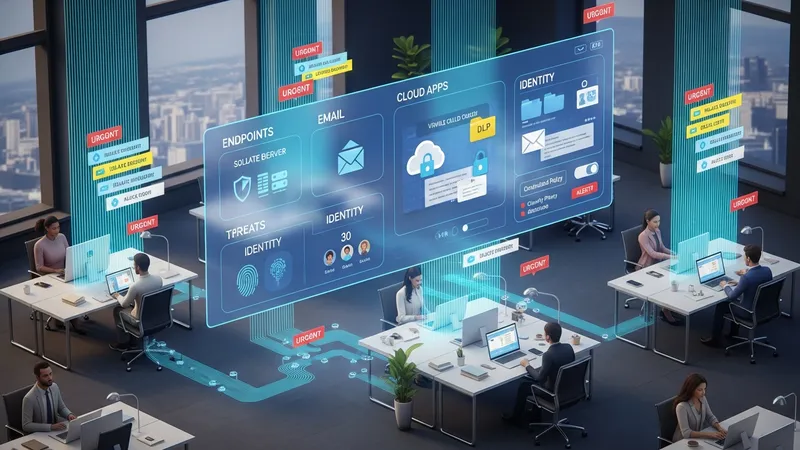
The concept presented here refers to a unified approach to protecting users, devices, and data across contemporary workplace environments. It combines multiple security functions — such as device-level defenses, email filtering, cloud application monitoring, identity verification, threat detection, and data controls — into a single operational view. The goal is to reduce gaps that appear when each control is operated independently, so security teams can see incidents and policy states across endpoints, mail systems, collaboration tools, and identity platforms in a coordinated way. Integration may help streamline incident handling and policy enforcement across distributed work environments.
In practical terms, integrated protection often means shared telemetry, correlated alerts, and centralized policy administration so that signals from one control can inform actions in another. For example, an anomalous login might prompt automated endpoint isolation recommendations or tighter email filtering for the affected account. Integration can also enable consistent data-loss prevention rules across cloud storage and email. While implementations vary by vendor and customer needs, common design aims include visibility across layers, prioritized detection outputs, and consolidated administration interfaces to reduce operational complexity.
- Endpoint detection and response (EDR) examples: Microsoft Defender for Endpoint — continuous device telemetry, behavioral detection, and investigation tools.
- Email and collaboration protection examples: Proofpoint or similar secure email gateways — message threat filtering, URL and attachment inspection, and phishing analysis.
- Cloud application security examples: CASB-style monitoring such as Netskope or cloud access controls — discovery of sanctioned and unsanctioned apps, policy enforcement, and data monitoring.
Integrated platforms may aggregate telemetry from these components and apply analytics to detect multi-stage attacks. For instance, automated correlation can link a suspicious attachment delivered by email to later anomalous endpoint activity, which may help reduce mean time to detection. Architectures frequently include a data lake or event bus to centralize logs and a detection engine that can apply rules or machine learning models. Teams often adopt layered policies that combine preventive controls, detection analytics, and automated or manual response workflows so that alerts carry contextual information about affected assets and users.
Identity protection commonly forms a core pillar alongside device and email controls. Identity solutions can include multifactor authentication, adaptive access policies, and identity threat detection that flags credential abuse or lateral movement. When identity signals integrate with endpoint and cloud controls, an observed risky sign-in can trigger session restrictions or require additional verification. Organizations may also use identity-aware microsegmentation to limit resource access. These linkages typically require careful policy mapping and role definitions so automated responses do not inadvertently disrupt legitimate business activity.
Data security and governance are often addressed through a combination of classification, loss-prevention policies, and encryption. Integrated approaches may apply consistent labels and DLP policies across email, endpoint file storage, and cloud drives so that sensitive content is subject to the same handling rules wherever it resides. Metadata and file access logs can be centralized for auditing and incident response. Such coordination can assist legal and compliance teams in establishing retention and access controls and in supporting investigations with consolidated evidence of file movement or exfiltration attempts.
Centralized management consoles and reporting dashboards typically aim to reduce task duplication by offering a single pane of glass for policy configuration, incident triage, and compliance reporting. Centralization may also support role-based administration, where different teams can have tailored views and permissions. However, integration projects often require planning for data flows, API mappings, and change-control to maintain stable operations. Interoperability with existing security information and event management (SIEM) systems or orchestration tools can be part of the design to reuse established workflows and preserve institutional knowledge.
In summary, the described approach emphasizes coordinated controls across endpoints, email, cloud applications, identity systems, and data governance to support modern workplaces. Integration often reduces manual correlation work and can surface multi-channel attack patterns more clearly, while requiring deliberate policy design and operational processes. The next sections examine practical components and considerations in more detail.