
Container Housing: Future Trends In Modular Living And Urban Development

Construction methods, materials, and sustainability aspects of container housing
Common construction methods for container housing in U.S. practice include cutting and reinforcing openings, attaching interior framing for insulation and services, and adding external cladding or roof assemblies to control thermal performance. Structural reinforcement may involve steel plates or additional framing where large openings are made. Waterproofing and corrosion mitigation are often addressed with coatings and careful detailing at seams. Builders and designers typically document these measures in construction drawings to meet building code and inspection requirements.
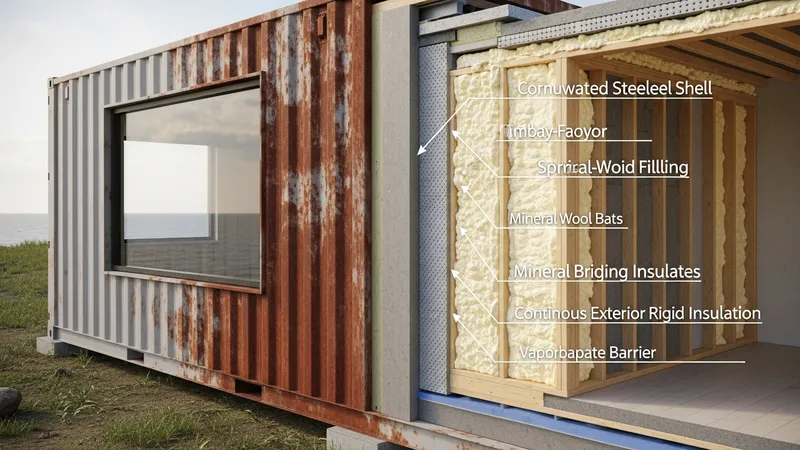
Material choices can influence durability and indoor comfort. Containers are made from weathering steel (often corten) that may require surface treatment when repurposed for housing; poorly treated surfaces can corrode in coastal or humid environments. Insulation strategies may include spray foam, mineral wool, or continuous exterior insulation to reduce thermal bridging. Ventilation, moisture control, and vapor management are commonly integrated to limit condensation and indoor air-quality risks.
Sustainability aspects of container housing are often framed in terms of material reuse, reduced on-site waste, and potential for factory-controlled fabrication. Reuse of shipping containers can reduce embodied steel demand relative to new framing in some scenarios, but conversion energy and additional materials for insulation and finishes also contribute to lifecycle impacts. Energy-efficiency measures such as high-performance insulation, LED lighting, and heat-pump HVAC systems are frequently considered to improve operational performance in U.S. climates.
Integration with renewable systems and resilient design measures is often discussed in U.S. planning contexts. Solar photovoltaic arrays, battery storage, and rainwater management systems may be paired with container units to support off-grid or low-impact operation where permitted. Designers typically evaluate site-specific constraints, local incentives, and grid interconnection rules when considering such systems within the regulatory frameworks of U.S. utilities and jurisdictions.