
CNC Punching And Bending Machines: How Automated Metal Forming Works

Types and Features of CNC Punching and Bending Machines in Mexico
CNC punching and bending machines available in Mexico broadly fall into discrete categories based on their functional emphasis and technological characteristics. These types include turret punch presses, press brakes, and integrated combination machines, each offering distinct operational features suiting different fabrication needs in metalworking sectors. Understanding these types provides insight into their application scopes and how their technical specifications meet industry requirements.
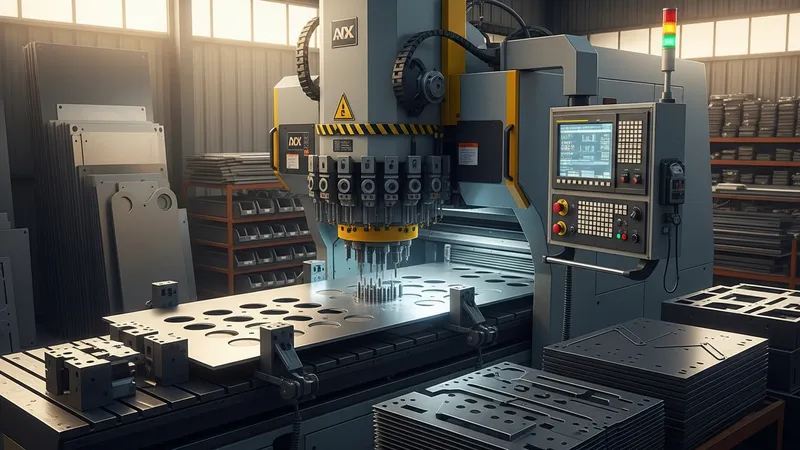
Turret punch presses are often designed with multiple tool stations that rotate to select desired punch shapes and sizes. These machines are particularly adapted for perforation or cutting operations on thin to medium-thick sheet metal. Their use in Mexico is common among manufacturers needing repetitive precision in component drilling or slotting, where speed sequences are programmed to optimize throughput.
Hydraulic press brakes focus on bending operations, using hydraulic cylinders to exert force on metal sheets against a die to achieve specific angles. This technology allows programmable bending angles and variables like pressure and speed. In Mexican fabrication contexts, these machines could be adapted for structural steel components or automotive part shaping where dimensional consistency is critical.
Combination machines merge both punching and bending capabilities into a single system, helping reduce handling between separate machine stations. These systems may provide efficiency advantages depending on product complexity and production volume, though their acquisition typically involves higher cost and sophisticated maintenance operations. Such intricacies are relevant for Mexican industrial plants evaluating overall workflow design and machine integration.