
Cloud Hosting And Managed IT Services: Key Concepts, Components, And Use Cases

Security, compliance, and data protection in cloud hosting and managed IT services
Security controls for cloud-hosted systems often blend provider-native features with supplemental tooling managed by service teams. Access management, network segmentation, encryption at rest and in transit, and vulnerability scanning are common elements. Managed service providers may operate these controls under agreed scopes—running scans, applying patches, and monitoring for suspicious activity—while customers retain responsibility for application-level security and sensitive configuration details, depending on the chosen shared-responsibility model.
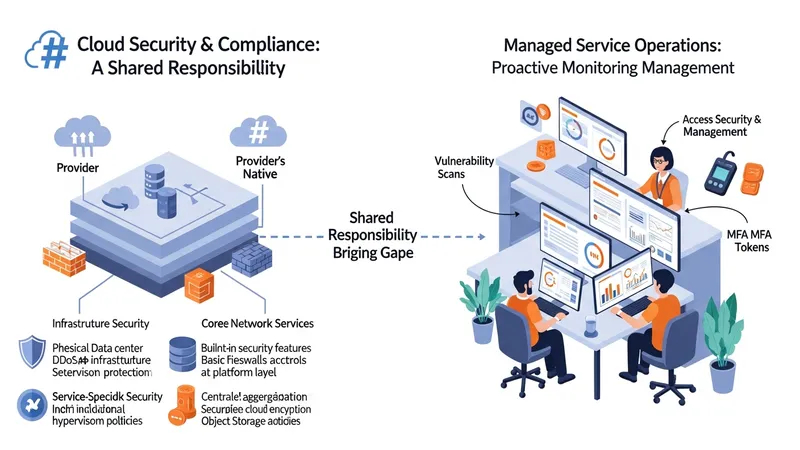
Compliance considerations frequently depend on industry requirements and data classification. Managed arrangements typically outline responsibilities for retention policies, audit logging, and evidence collection. Organizations may map regulatory obligations to technical controls—retention schedules to object lifecycle rules, or audit trails to immutable logging systems. Managed teams often support evidence gathering for audits by preserving logs and snapshots, but documented responsibilities should define which party provides specific artifacts and attestation.
Data protection strategies commonly include regular backups, replication, and tested recovery procedures. Backup cadence may be aligned to recovery point objectives and retention requirements; managed teams often perform regular verification of backup integrity and restoration drills. Encryption management—key rotation and secure key storage—may be a shared concern; teams may use provider key management or external systems depending on their trust and compliance posture.
Threat detection and response can leverage a mixture of native alerts, security information and event management, and managed security operations. Managed services may provide alert triage and initial containment steps, while escalation paths route more complex investigations to specialized security teams. Continuous improvement through periodic vulnerability assessments and patch management cycles typically forms part of a layered defense strategy, stated and executed as organizational considerations rather than guaranteed prevention.