
Car Injury Law Firms: How Legal Representation May Help After A Vehicle Accident

Car injury law firms provide legal services to people involved in vehicle accidents, focusing on the civil processes that follow collisions. These firms typically assess liability, organize evidence, prepare legal documents, and represent clients in communications with insurers or in court. Their role is to navigate procedural requirements, explain potential legal avenues, and coordinate information from medical providers, police reports, and third-party experts to frame a claim or defense within applicable rules and deadlines.
After an accident, a firm’s activities may include initial case screening, detailed fact-finding, and advising on possible outcomes without making guarantees. Legal teams often work with accident reconstruction specialists, medical providers, and vocational experts to clarify the nature and extent of loss or injury. They also prepare formal filings, draft demand letters, and may negotiate settlements on behalf of a claimant; if resolution is not reached, the firm can pursue litigation steps according to civil procedure in the relevant jurisdiction.
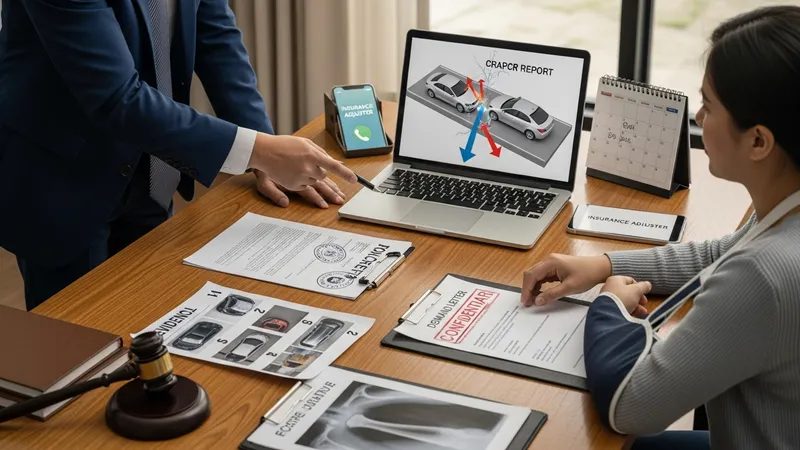
- Case intake and initial legal evaluation — A structured intake process that gathers statements, medical summaries, and policy information to determine potential claims and applicable deadlines.
- Evidence preservation and investigative methods — Collection and organization of physical evidence, witness accounts, photos, vehicle data, and expert analysis to support fault and damages assessments.
- Claims negotiation and settlement preparation — Development of a valuation for losses, drafting demand documents, and engaging insurers or opposing counsel to explore settlement options or preparations for trial.
Case intake and initial evaluation often set the framework for subsequent actions. During intake, a firm typically documents the chronology of events, identifies involved parties and their insurance carriers, and records observable injuries and vehicle damage. This stage may include requests for medical records authorization and obtaining traffic collision reports. Early assessment may help identify potential statutory or procedural deadlines that apply in a given jurisdiction; those deadlines can vary and often influence whether a claim proceeds to negotiation or litigation.
Evidence preservation is a central activity and may involve multiple types of documentation. Photographs of the scene, vehicle damage, and visible injuries can be supplemented by surveillance footage, telematics or “black box” data, and witness statements. When appropriate, legal teams may coordinate with technical experts to perform accident reconstruction or obtain engineering opinions. Maintaining a clear chain of custody for physical or electronic evidence can be important if evidence must be admitted in court or relied upon during settlement talks.
Communication with insurance companies typically follows structured procedures and formal documentation. Law firms often prepare a demand package that outlines liability, itemizes economic and non-economic losses, and attaches supporting records such as medical bills and repair estimates. Insurance adjusters may respond with written offers that the firm reviews against its valuation. Negotiations can proceed through written exchanges, mediated meetings, or informal settlement discussions, and may involve uncovering policy limits or secondary sources of recovery.
If a case does not resolve in negotiation, litigation steps can include filing a complaint, engaging in discovery, deposing witnesses, and presenting expert testimony. Litigation timelines and procedures vary by court and jurisdiction; the process can be resource-intensive and typically requires detailed preparation. Legal representation may manage filings, courtroom advocacy, and coordination of experts to address technical issues like causation, impairment, or future care needs, while remaining attentive to cost and timing considerations.
In summary, car injury law firms perform multiple interrelated functions after a vehicle accident, including intake, evidence gathering, insurer communication, negotiation, and possible litigation. These activities typically proceed in stages and may vary depending on jurisdictional rules and the specifics of each incident. The next sections examine practical components and considerations in more detail.