
Business Incorporation Services: Key Steps In Forming A Legal Business Entity

Legal form choices and implications for Business Incorporation Services in Hong Kong
Selecting an appropriate legal form is frequently the first substantive decision in the incorporation process. In Hong Kong, private companies limited by shares are commonly used for commercial trading and investment activities; they may often require distinct governance provisions such as share classes and director responsibilities. Sole proprietorships and partnerships can be administratively leaner but may expose owners to personal liability. Branches of foreign companies may retain upstream corporate relationships and require specific registration with the Companies Registry. Each option can influence accounting, tax reporting, and director or secretary requirements.
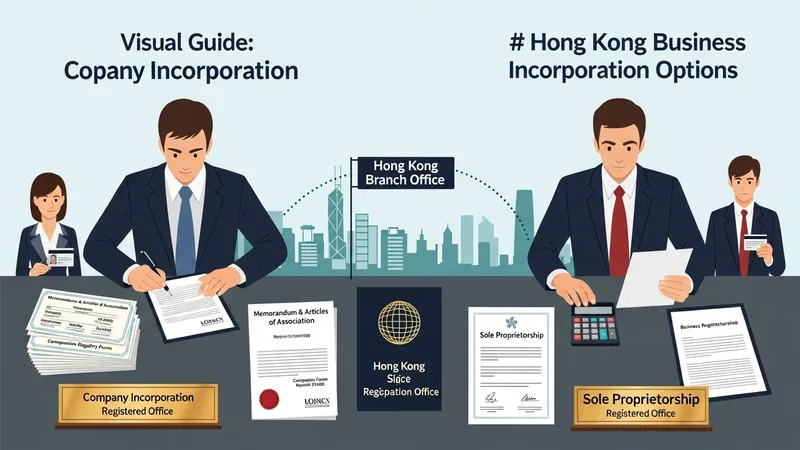
Practically, a private company limited by shares may typically need at least one director, a company secretary (an individual resident in Hong Kong or a Hong Kong-registered corporate secretary), and a registered office address in Hong Kong. The residency of directors and company secretary rules can affect suitability for a given operator. For sole proprietors or partnerships, the process often centres on obtaining a Business Registration Certificate from the Inland Revenue Department and maintaining simpler record-keeping, although tax filing obligations remain.
When considering a branch or representative office, business owners often weigh the degree of operational independence and disclosure obligations. A branch usually requires registration and may have to file financial information attributable to the Hong Kong operations, while a representative office is typically limited in commercial activities. These distinctions can affect continuity, liability, and the extent of statutory filings required by the Companies Registry and the Inland Revenue Department.
Selection criteria for the legal form often include liability containment, anticipated capital or investment structure, director and secretary logistics, and administrative capacity to meet statutory deadlines. Advisors and service providers in Hong Kong may outline these factors objectively so that entrepreneurs can assess how each form aligns with governance, tax, and administrative needs without implying a singular preferred choice.