
Brokerage Accounts And Trading Platforms: Key Features And How They Work

Order execution, order types, and trade routing in brokerage accounts and trading platforms
Order types commonly supported across platforms include market orders, which seek immediate execution at prevailing prices; limit orders, which set a maximum or minimum acceptable price; and stop or stop-limit orders, which aim to trigger trades when prices reach specified thresholds. Some platforms offer conditional or advanced orders that execute based on time, price, or other triggers. The availability and behavior of each order type can differ slightly by platform, so users may see variations in how orders interact with market liquidity and partial fills.
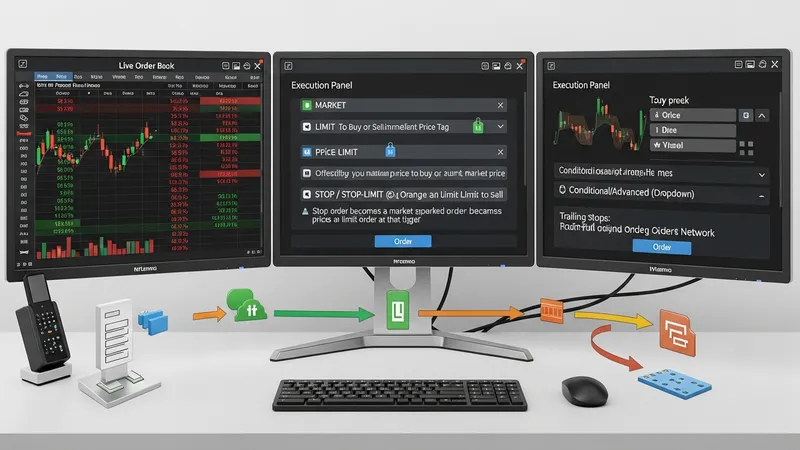
Trade routing determines where an order is sent for execution and can influence execution speed and price improvement opportunities. Orders may route to national exchanges, alternative trading systems, or market makers. Brokers may disclose routing practices in customer documents; these disclosures typically describe factors such as price, speed, likelihood of execution, and any relationships that influence routing. Practices such as payment-for-order-flow can be present in some markets and are often described in regulatory materials rather than implying a specific outcome for execution quality.
Execution quality metrics may include measures such as execution price relative to prevailing quotes, fill rates, and time-to-fill. Some platforms publish execution reports or summaries that illustrate typical performance across order types and venues. For algorithmic trading or larger orders, advanced execution algorithms may break orders into smaller slices to reduce market impact or to seek liquidity across venues. Such algorithms can be useful for larger transactions but may introduce complexity in assessing final execution results.
Operational latency and user interface design also influence trade experiences. High-frequency traders often prioritise low-latency connections and direct market access, while retail traders may prioritise intuitive order-entry workflows and pre-trade risk checks. Platform features such as order confirmations, audit trails, and trade blotters support recordkeeping and compliance. Awareness of these execution and routing mechanics may inform how different platform examples align with an investor’s trading frequency and strategy.