
Breast Cancer Screening: Understanding Early Detection Strategies

Screening Approaches in Breast Cancer Detection
Breast cancer detection relies upon several approaches that balance sensitivity, specificity, accessibility, and patient comfort. Mammography, as a widely established tool, typically serves as the primary screening method for average-risk populations. Its implementation in routine screening programs has contributed to the early identification of non-palpable lesions in large population groups. The technique is especially effective in individuals aged 50 and older, although it may be offered starting at earlier ages based on individual circumstances and emerging guidelines.
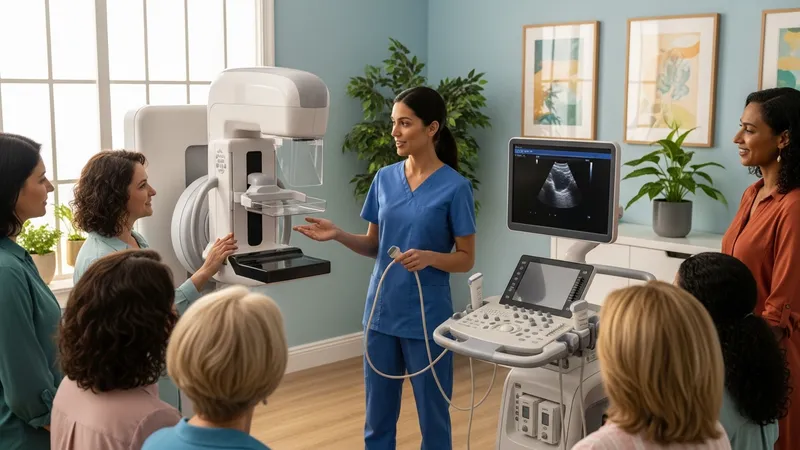
Ultrasound is often incorporated as a secondary imaging modality rather than a universal screening tool. Its particular strength lies in its use with denser breast tissue or younger individuals for whom mammography may yield less reliable images. Ultrasound can distinguish between solid and fluid-filled lesions, thereby narrowing down follow-up options and preventing unnecessary invasive procedures in certain cases. It is generally non-invasive and does not expose recipients to ionizing radiation, making it amenable to repeated use in diagnostic workups.
Biopsies are conducted when imaging methods reveal a mass or abnormality that cannot be conclusively classified as benign or malignant. The process involves extracting a minute tissue sample, often with a needle guided by imaging, minimizing invasiveness. The specific technique—such as core needle, fine-needle aspiration, or surgical biopsy—may vary based on the lesion’s location, size, and initial imaging results. Pathological analysis of biopsy material provides the definitive assessment for malignancy and offers details about the tumor’s properties.
The decision on which combination of screening or diagnostic tests to use frequently depends on a balance of clinical findings, risk factors, and guideline-based recommendations. There is no universally optimal sequence; instead, healthcare providers may tailor protocols to fit individual needs while taking into account the strengths and limitations of each available method. This multifaceted approach underscores the complex, evolving landscape of breast cancer detection.