
Bookkeeping Software: Understanding Core Modules For Small Business Accounting

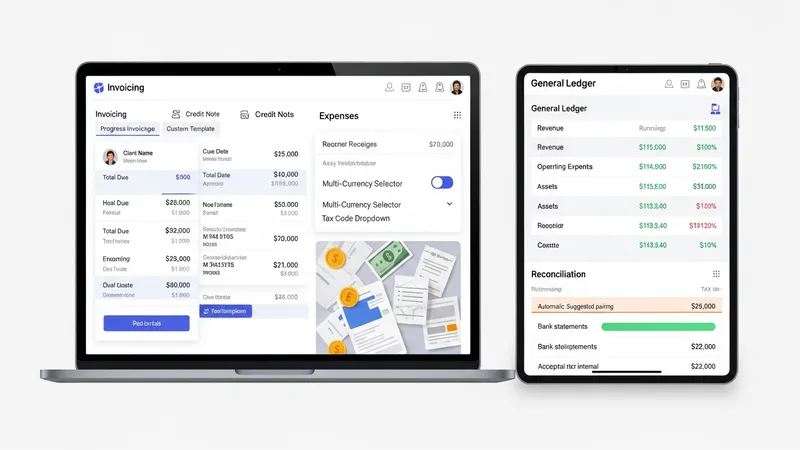
Bookkeeping Software: Module Types and Roles in Small Business Accounting
Modules within bookkeeping systems typically map to core bookkeeping tasks: recording sales and receipts, logging expenses, maintaining the general ledger, and reconciling external statements. Each module serves a specific accounting role and may include sub-features such as recurring transaction templates, multi-currency fields, and tax code assignments. Small businesses often assign responsibility for one or more modules to employees, contractors, or external bookkeepers, and the modules’ design can affect how easily record ownership is established and maintained.
When selecting module configurations, businesses may weigh the trade-offs between simplicity and depth of function. A lightweight invoicing module may cover basic billing needs and payment recording, while a more feature-rich version can support progress invoicing, credit notes, and custom templates. Similarly, a reconciliation module can range from a manual match interface to semi-automated matching using suggested pairings. These variations influence training requirements and reconciliation frequency but do not inherently determine accounting quality on their own.
Inter-module workflows are an important operational consideration: for example, an expense entry in the payables module should update the general ledger and appear in cash flow reports without manual duplication. Workflow design may include approval steps for high-value entries, budget checks against projected allocations, or integration checks for inventory-linked expenses. Thoughtful mapping of these workflows can reduce repetitive tasks and may support clearer audit trails when entries are reviewed or adjusted.
Another role-related aspect is access control and segregation of duties. Smaller teams may combine roles out of necessity, whereas slightly larger practices can separate data entry, approval, and review functions. Modules that allow granular permission settings and detailed audit logging can support such separation. Consideration of user roles and typical internal processes often helps determine which modules and settings will best align with an organization’s accounting practices.