
Automatic Pallet Wrapping Machine: How Automated Stretch Wrapping Systems Work

Automated pallet wrapping: automation controls and integration
Control systems for automated wrappers range from standalone timers to PLCs that interface with plant-level automation. In Mexican manufacturing sites, PLC-controlled wrappers may be connected to conveyor controllers, barcode scanners, or packaging execution systems to coordinate wrap cycles with pallet arrival. Such integration can reduce idle time and help ensure each pallet receives the intended wrap pattern. Communication options may include discrete I/O, Ethernet/IP, or Modbus, depending on the plant’s control architecture. Integrators often prioritize simple fault reporting and clear HMI menus to streamline operator response.
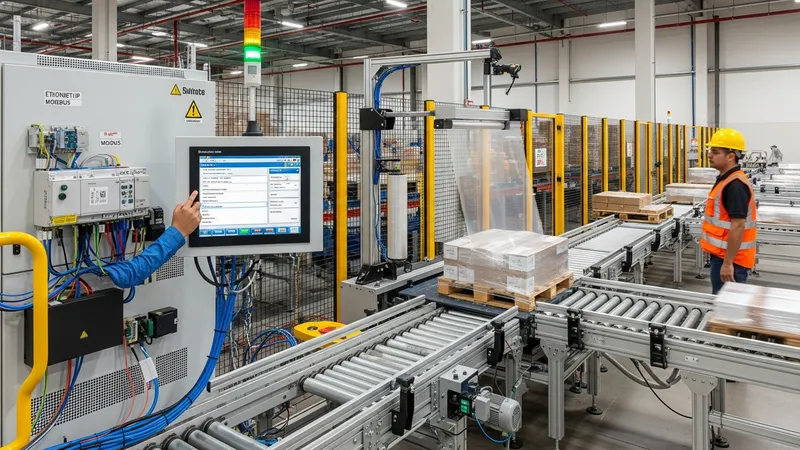
Interfacing wrappers with upstream equipment requires attention to pallet detection and positioning. Photoelectric sensors, proximity switches, or encoders can signal the wrapper when a pallet is correctly positioned, which reduces cycle errors and film waste. In Mexican distribution centers with mixed pallet types, adjustable pallet guides and automated stops are commonly used to ensure consistent placement. Line layout may include accumulation areas or buffer conveyors so that wrapper cycles do not impede upstream packing or palletizing operations, supporting a smoother overall throughput.
Data capture and basic metrics are increasingly part of wrapper specification. Machines may log cycle counts, film usage estimates, and fault histories that maintenance teams review for preventive care. In Mexico’s larger industrial clusters, some operators integrate these logs with maintenance management software to schedule bearing replacements or film carriage servicing. While full Industry 4.0 implementations are not universally adopted, capturing simple performance indicators can help identify trends such as increased film breaks or repeat faults tied to particular shifts or film batches.
Choosing control vendors and service partners in Mexico often involves assessing local support and spare-parts availability. Machines with widely used controllers and standardized components may be easier to service through local distributors in cities like Monterrey, Mexico City, or Guadalajara. When considering integration, teams may request documentation for I/O mapping and recommended maintenance intervals so local technicians can perform routine calibration and troubleshooting with minimal external support. These considerations can influence uptime and the practical utility of automation features.