
Artificial Intelligence In Production Planning: How AI Supports Demand Forecasting And Scheduling

Machine Learning Models Applied to Demand Forecasting
Machine learning encompasses a suite of algorithms that identify patterns from data to make predictions or classifications. Common approaches for demand forecasting include regression models, time series analysis, and more complex structures like recurrent neural networks (RNNs). Model selection often depends on the nature and volume of available data as well as the forecasting horizon.
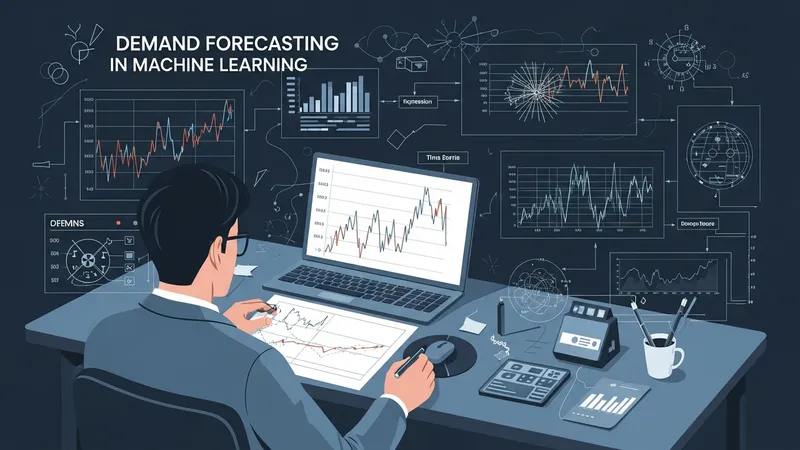
Regression techniques typically relate demand to explanatory variables such as price, promotions, or economic indicators. Time series models analyze sequential demand data to capture trends and seasonality. RNNs and other deep learning methods may be employed when datasets incorporate complex dependencies or require handling of irregular intervals. Each approach carries strengths and limitations in terms of interpretability, computational demand, and adaptability.
Training these models involves exposure to historical data, during which parameters adjust to minimize prediction errors. Validation processes commonly segment data into training and testing subsets to estimate model accuracy on unseen observations. Overfitting—where models conform too closely to training data and perform poorly in real scenarios—is a common risk addressed through techniques like regularization or cross-validation.
Updates to forecasting models can be performed periodically or continuously, depending on the dynamics of the production environment and availability of new data. Incorporating fresh inputs helps models maintain relevance amid changing consumer behavior or market conditions. Transparency in model functioning also supports comprehension and trust among planning personnel.