
Artificial Intelligence In Cancer Treatment: How AI Supports Diagnostic Processes

Workflow Integration of AI Tools in UK Oncology Research
Integration of AI tools into oncology research workflows in the UK is guided by a structured approach involving initial feasibility assessments, secure data transfer, and compliance with institutional review board (IRB) oversight. Before AI is applied to sensitive data, UK academic and NHS partners typically conduct data access risk assessments and project protocol evaluations, ensuring that privacy, safety, and ethical implications have been carefully considered. These initial phases are essential for supporting responsible AI deployment in research environments.
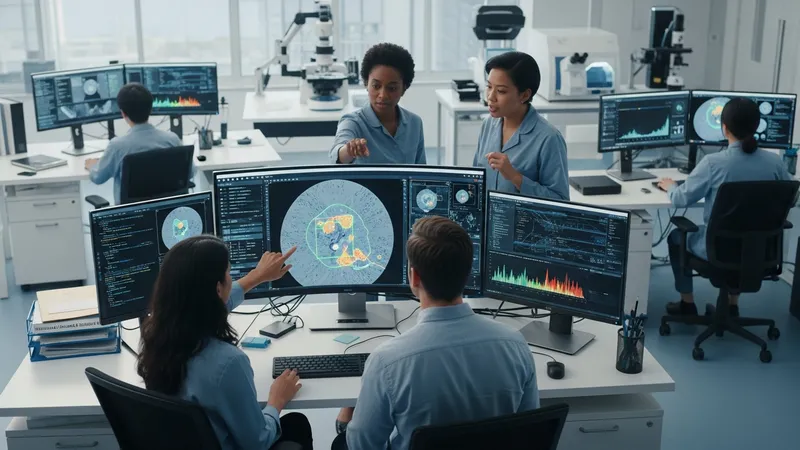
Once approvals are in place, AI systems are usually implemented at defined stages of the research workflow. For imaging analysis, AI may support routine tasks such as lesion segmentation, feature extraction, or the quantification of histological parameters, reducing manual workload while allowing researchers to focus on interpretation and hypothesis testing. Pathology departments within NHS trusts, such as those partnering with the Oxford University AI Pathology initiative, may use digital platforms to facilitate the concurrent review of AI-assisted assessments by multiple experts.
Laboratory research can benefit from AI-based computational platforms, such as AlphaFold, that streamline the prediction of protein structures. UK scientists often incorporate these insights into experimental planning, accelerating hypothesis generation without replacing laboratory validation. This interoperability between computational and traditional wet-lab methods characterises the multidisciplinary approach increasingly prevalent in UK cancer research, enhancing the efficiency and scale of exploratory studies.
Continuous feedback and model monitoring are integral to sustained workflow integration. Teams typically establish pipelines for periodic assessment of AI tool performance, re-training models as new data becomes available from NHS or research sources. This iterative approach ensures the AI systems remain relevant and can help flag emerging issues with data drift or population changes. Collaboration among NHS clinical staff, academic researchers, and technical developers remains key to successful AI workflow integration within the cancer research landscape.