
AI Scheduling For Plumbing Businesses: How Automation Supports Job Booking And Dispatch

Performance measurement, privacy safeguards, and ongoing maintenance for booking and dispatch automation
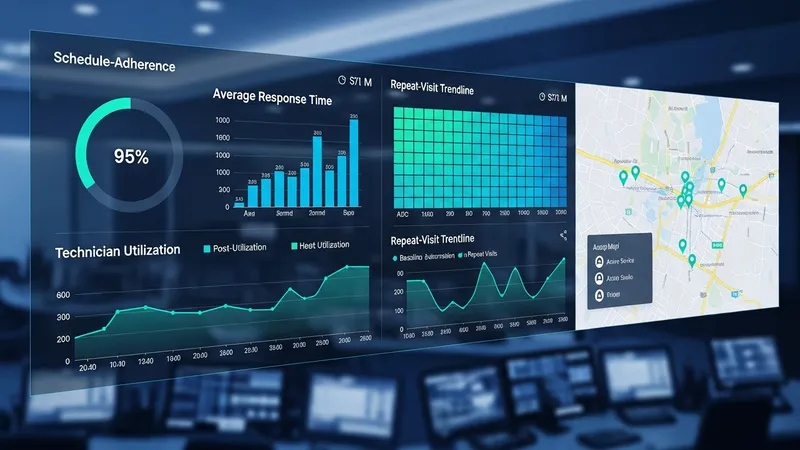
Key performance indicators for scheduling automation often include schedule adherence, average response time from request to assigned appointment, technician utilization rates, and the rate of repeat visits due to incomplete resolution. Tracking these KPIs over time helps organizations determine whether rule changes or model updates improve operational outcomes. It is typical to measure baseline performance before introducing significant automation changes to objectively assess impact.
Privacy safeguards are important when systems record customer contact details and location histories. Common practices include minimizing stored location granularity, implementing role-based access, and retaining logs for only necessary durations. Regular reviews of access privileges and data retention policies help reduce exposure and align with general data-protection expectations in many regions.
Maintenance routines for scheduling systems include updating rule sets to reflect changes in service offerings, refreshing predictive models with recent job-duration data, and monitoring integration health. Vendors and in-house teams may schedule periodic audits of routing accuracy, rule conflicts, and notification flows so that automated behaviors remain aligned with operational realities. Documentation of rule logic and change history supports informed adjustments over time.
Continuous improvement often involves controlled experiments—adjusting a single scheduling parameter or notification cadence for a subset of appointments and comparing KPI changes against a control group. Such iterative evaluation helps identify which adjustments may typically yield measurable improvements in efficiency or customer experience without assuming universal benefits across different operational contexts.