
AI Sales Agents: How Automation Supports B2B Lead Generation

Data integration, enrichment, and CRM synchronization considerations
Data quality and integrations are foundational for automated lead workflows. In U.S. B2B contexts, enrichment sources often supply industry codes, headcount ranges, and executive contact details that inform scoring and routing. Automated agents typically rely on frequent synchronization with CRMs like Salesforce or HubSpot to reflect outreach outcomes and avoid duplicate efforts. Implementing full-field mapping, consistent timestamp conventions, and conflict-resolution rules reduces errors. Teams often run pilot syncs on limited records to validate transformations before scaling to the entire contact base.
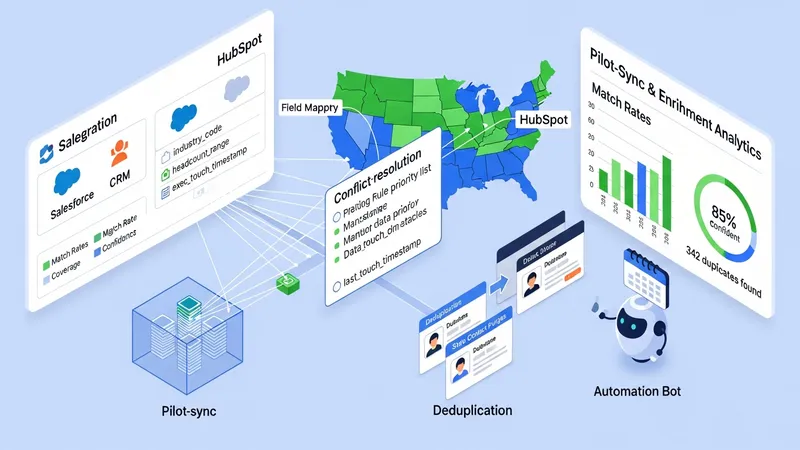
Data enrichment can improve targeting but may introduce accuracy trade-offs; third-party datasets vary in coverage across U.S. states and industry verticals. Organizations often track enrichment source attribution to assess which providers contribute the most useful signals for conversion. Regular de-duplication routines and stale-contact purges are typically scheduled to keep automation from re-engaging unreachable contacts. Reporting on match rates, enrichment confidence, and duplicate counts helps stakeholders prioritize data-improvement efforts over time.
Synchronization strategies commonly include near-real-time webhooks for activity logging and periodic batch updates for heavier fields. Webhooks may push engagement events from the automation platform into the CRM so account owners see replies or outreach attempts immediately. Rate limits and API quotas—often specified by U.S.-based vendors—can influence how frequently systems update and may require queuing or backoff strategies. Documenting API limits and expected latencies helps sales operations design reliable workflows.
Security and access control are typical operational considerations in U.S. deployments. Role-based permissions, audit logging, and encryption-in-transit are commonly required controls. Many organizations require vendors to support single sign-on and to provide exportable logs for compliance reviews. Defining retention policies for engagement records and establishing clear ownership for data stewardship are practical steps to reduce operational risk while maintaining automated lead-generation efficiency.