
AI Recruiting Agents: How HR Teams Automate Candidate Sourcing And Screening

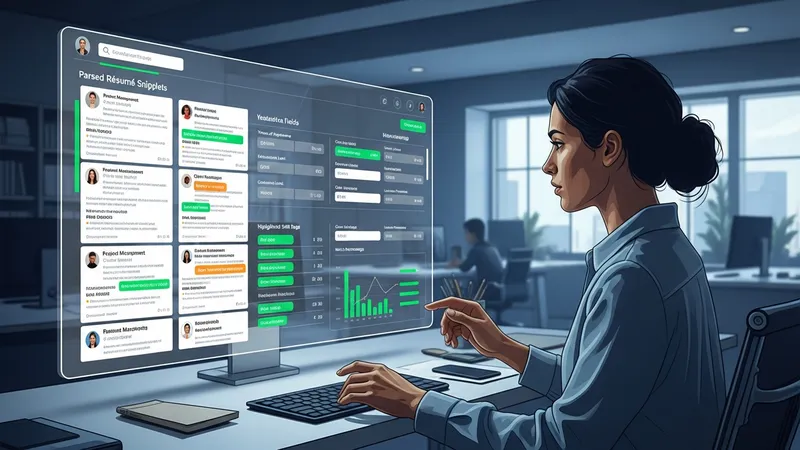
AI recruiting agents are software components that help human resources teams automate sourcing and screening of candidates for open roles. These agents typically ingest applicant data from resumes, profiles, and recruitment platforms, then apply algorithms to match candidate attributes to role requirements, flag potential fits, and organize candidate profiles for recruiter review. In practical deployments within the United States, these tools often connect to applicant tracking systems (ATS) and professional networking services to streamline workflows.
Such agents may perform distinct functions: automated search of talent pools, parsing and standardization of résumé data, preliminary screening through rule-based or machine-learned models, and administrative tasks such as interview scheduling or status updates. Their outputs are commonly presented to recruiters as candidate shortlists, relevance scores, or suggested next steps, leaving final decisions to HR professionals and hiring managers.
- Ideal — an AI workforce intelligence assistant that can screen applicant pools and surface candidates based on configured criteria; used by some U.S. recruiting teams to speed resume review.
- Eightfold.ai — a talent intelligence platform that maps skills and internal mobility paths and may assist U.S. teams with candidate rediscovery and matching.
- LinkedIn Talent Solutions — a U.S.-available service that uses profile data and inferred signals to help sourcing and initial outreach workflows.
- Greenhouse — an applicant tracking system used in the U.S. that integrates with AI screening and sourcing tools to manage candidate pipelines.
Comparisons among these examples typically focus on integration points, data sources, and configurability. Some agents emphasize talent rediscovery from internal databases, while others prioritize external sourcing from professional networks. In U.S. deployments, integration with existing ATS platforms such as Greenhouse or Workday may determine which agent is practical to adopt. Organizations often weigh whether an agent primarily augments human review or automates larger portions of screening.
Frameworks for deploying AI recruiting agents in U.S. HR teams commonly include stages for data ingestion, model selection or rules configuration, human-in-the-loop review, and performance monitoring. Data ingestion may involve parsing résumés and normalizing fields; model selection can be rule-based keyword matching or statistical models trained on historical hiring outcomes. Human-in-the-loop oversight is often retained to review borderline cases and to provide corrective feedback to models.
Non-absolute benefits reported by practitioners in the United States may include reduced time spent on repetitive screening tasks and more consistent initial filtering across large applicant volumes. These potential efficiencies can allow recruiters to focus on candidate engagement and evaluation of qualitative fit. However, organizations typically continue to use human judgment for final candidate decisions and cultural fit assessments.
Contextual considerations for U.S. HR teams include compliance with federal guidance on discrimination and careful handling of candidate data under privacy expectations. Recruiters often need to document how automated decisions are made and maintain audit trails that support internal review. The next sections examine practical components and considerations in more detail.