
AI Intelligence Automation: Key Concepts And Real-World Applications

Applications of AI Intelligent Automation in Business Environments
AI-driven intelligent automation finds diverse usage across sectors such as financial services, healthcare, retail, and manufacturing. In finance, for example, automation can handle routine tasks like transaction processing, while AI models may assess fraud risk based on behavioral data patterns. Healthcare applications may include automating administrative duties like patient record management and using AI to extract relevant information from clinical notes. Retail businesses could implement automation for inventory monitoring combined with predictive analytics to adjust stock levels according to anticipated sales trends.
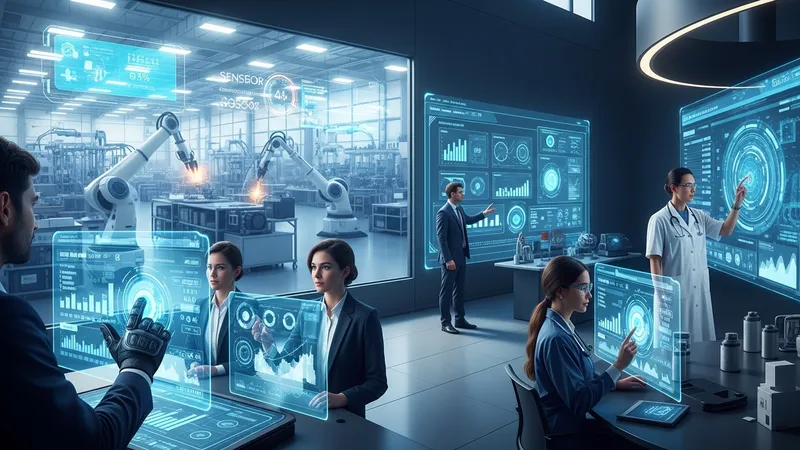
Manufacturing companies may use intelligent automation to enhance quality control with machine learning models analyzing sensor data for defect detection. Robotic arms controlled by automation scripts can execute assembly tasks precisely, potentially reducing variability. Across these examples, the consistent theme is the augmentation of human activities rather than outright replacement, where AI technologies optimize decision support and automate repetitive functions. This blended approach often aims to improve efficiency and resource utilization within existing business processes.
In customer service, AI-driven chatbots and virtual assistants capable of understanding natural language input enable preliminary inquiry responses, often rerouting complex issues to human agents. This blend may improve response times and allow human resources to focus on higher-level interactions. Automated report generation informed by predictive analytics also assists decision-makers by summarizing key performance indicators and forecasting outcomes. These applications illustrate how AI intelligent automation may create multi-layered support systems in organizational workflows.
Despite promising implementations, the integration of AI intelligent automation may also require adjustments in workforce strategies, training, and process redesign. Certain roles might shift toward oversight and exception management as automated systems assume routine task responsibilities. Such evolution involves balancing automation benefits with human expertise to maintain operational robustness. Understanding these dynamics is important for organizations considering incremental adoption within complex environments.