
AI CV Makers: How Automated Resume Builders Work And What To Expect

Automated resume generation tools are software systems that assist with composing and formatting professional résumés or curriculum vitae. These systems commonly combine pattern recognition, predefined templates, and natural language generation to extract relevant information from a user’s input and assemble a structured document. Typical functions include parsing existing documents, suggesting phrasing for responsibilities and achievements, and organizing sections such as work history, education, and skills. The goal is to reduce manual formatting and to present information in a clear sequence that recruiters or automated screening systems can evaluate.
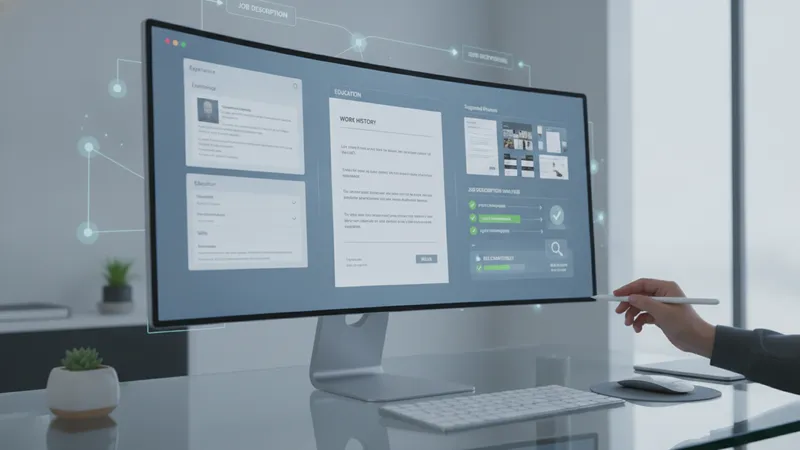
These systems may analyze job descriptions to suggest relevant keywords, propose section orders that reflect career priorities, and offer variant layouts for differing application contexts. Some use machine-learned models to recommend skills that match described tasks, while others focus on consistent typography and spacing for print and digital delivery. Limitations often relate to the quality of user-provided input and the extent to which templates fit distinct career paths; outcomes may require human editing to meet niche or highly technical role expectations.
- Rezi — A tool that typically emphasizes keyword matching and automated content suggestions for résumé sections; may provide both free and paid plans depending on features.
- Zety — A web-based editor offering templated layouts and phrase suggestions for common roles; often includes export in multiple file formats and guided prompts.
- Resume.io — An online résumé and cover letter builder with configurable templates and formatting controls; typically offers tiered access to templates and downloads.
Different products implement distinct approaches: template-driven editors assemble user entries into fixed layouts, while generative systems may produce new phrasing based on brief prompts. Template-driven solutions often provide predictable file structures that may be easier for applicant tracking systems (ATS) to parse, whereas generative tools can suggest more expressive achievement statements but may require manual refinement. When evaluating outputs, users commonly check for consistency in tense, quantifiable metrics where relevant, and alignment between stated skills and described duties.
Keyword matching and job description analysis are frequent capabilities. Systems may scan a target role’s description and identify recurring terms to emphasize in a résumé; such matching can make documents more discoverable in automated screens but can also introduce repetitive phrasing if applied without judgment. Many platforms allow users to compare a résumé against a sample description and receive a similarity score or highlight missing keywords, which can be used as a diagnostic rather than a definitive measure of suitability for a specific posting.
Formatting and export options vary and can affect downstream compatibility. Common export formats include PDF and plain text; some platforms also generate Word documents. Choice of layout influences how content is read by recruiters and parsing software: for example, multi-column designs may appear attractive on-screen but can confuse simple parsers. Users often balance aesthetics with machine readability by selecting templates that maintain linear section order and avoid excessive graphical elements that impede text extraction.
Data handling and privacy considerations are relevant when using automated résumé services. Providers may retain submitted content to improve models or to provide template autosave, so data retention policies and export controls are important to review. When entering sensitive information—such as dates of birth or identification numbers—users may prefer to omit or redact those fields. Platform privacy statements typically outline whether inputs are used to train language models and whether personal data is transmitted to third-party analytics services.
In summary, automated résumé generators combine template management, keyword analysis, and language assistance to accelerate document creation while leaving room for user editing. Outputs may often require human review for specificity, quantifiable detail, and alignment with a particular role. The next sections examine practical components and considerations in more detail.