
Agricultural Machinery: How Equipment Selection Influences Farm Productivity

Mechanized farming combines powered equipment with organized field operations to perform tasks such as soil preparation, seeding, crop care, water management, and material handling. This concept covers a range of machines and attachments used to convert labour, fuel, and inputs into measurable field work. Machines are selected and organized around crop cycles, landform characteristics, and the desired throughput of planting and harvesting operations. The overall objective in these systems is to enable timely field operations while managing resource inputs and operational risk in a way that matches enterprise scale and crop requirements.
The role of mechanized equipment in field operations typically spans primary tillage, secondary tillage, planting, pest and nutrient application, harvesting, and post-harvest handling. Equipment choice can influence soil condition, compaction, fuel use, and scheduling windows for operations that are sensitive to weather. Complementary elements such as water-delivery hardware, conveying systems, and storage handling are often considered part of the operational setup so that harvested material moves efficiently from field to storage. Decisions emphasize functional fit, maintenance capacity, and seasonal timing rather than promotional attributes.
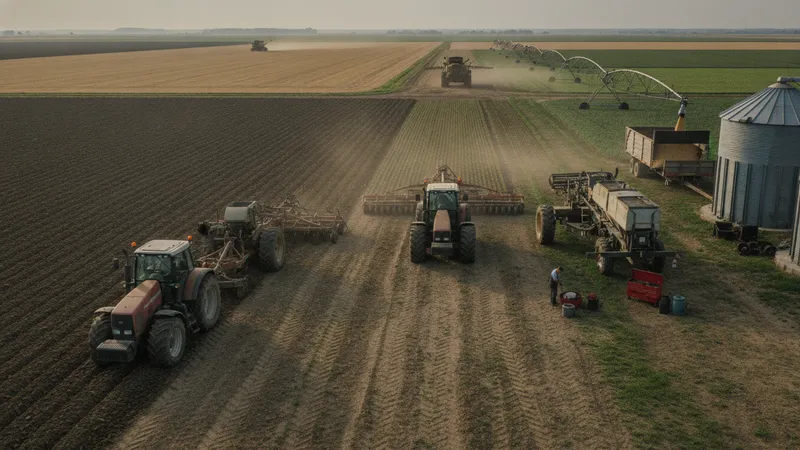
- Tractors: wheeled or tracked prime movers that supply traction and power take-off (PTO) to operate ploughs, planters, sprayers and loaders; size and configuration vary with tasks and field conditions.
- Combine harvesters: machines that cut, thresh and separate grain or seed from biomass; models differ by crop type, throughput capacity and header compatibility.
- Planters and seeders: precision seed placement tools designed for row crops or broadcast systems; may include metering systems to adjust seeding rate.
- Tillage implements: ploughs, discs, cultivators and harrows used for soil conditioning; selection often depends on soil texture, residue management and erosion control.
- Irrigation systems: surface, sprinkler and drip equipment for water delivery and scheduling; choice depends on water source, crop needs and landscape.
- Material-handling tools: loaders, conveyors and grain vacs used for moving harvested crop, fertilizer and inputs within the farmstead.
Matching equipment to crop and terrain often requires evaluation of traction, ground pressure and implement width. Machines that exert lower ground pressure may reduce compaction on delicate soils, while wider implements can increase field coverage but also demand higher power and transport considerations. In sloped or irregular fields, articulated or tracked machines may offer better stability. The decision process typically considers how an implement’s working width and operational speed translate into area covered per hour and how that aligns with seasonal windows for activities like planting and harvest.
Capacity and throughput considerations typically influence purchase or lease choices and may affect crew size and scheduling. For harvesting equipment, throughput is often expressed as mass or volume processed per hour and can vary with crop moisture content and field conditions. Planting and spraying operations are planned around achievable hectares per hour given implement width and ground speed. Producers frequently estimate required capacity based on peak workload periods to avoid bottlenecks during critical operations, understanding that higher-capacity machines may increase fuel and maintenance demands.
Maintenance, parts availability and lifecycle planning are central to sustained operation. Regular servicing intervals for engines, hydraulics and drivetrains can extend usable service life, while wear items—tyres, cutting elements, bearings—typically require more frequent replacement. Availability of spare parts and diagnostic tools can influence downtime and repair lead times; some regions may see longer waits for specialized components. Owners often track maintenance histories and plan for component replacement cycles so that equipment is available during key seasonal windows rather than relying on emergency repairs.
Integration of water delivery, material handling and control systems can improve operational flow and reduce manual handling. For example, synchronizing harvester unloading intervals with on-farm transport can reduce bottlenecks during harvest. Irrigation hardware and soil moisture sensing may be combined with scheduling software to adjust application timing. Such integration often requires assessing electrical, hydraulic and data interfaces to ensure components communicate reliably. Decisions about integration are typically guided by functional compatibility, intended outcomes, and the capacity of farm personnel to maintain combined systems.
In summary, mechanized field equipment and supporting systems encompass a spectrum of implements and infrastructure that together enable timely field operations, water management and post-harvest handling. Choices about machines are typically driven by crop types, field conditions, throughput needs and maintenance capacity, rather than singular performance claims. The next sections examine practical components and considerations in more detail.