
Foundation Contractors: Key Steps In Residential Foundation Construction

Foundation contractors play a central role in constructing the foundational elements of residential structures. Their expertise covers a range of activities that start with site evaluation and extend through to the final inspection of the foundation system. Contractors work alongside engineers and builders to ensure foundations are properly designed and constructed to support structural loads and respond to site-specific soil conditions. By implementing recognized construction methods and maintaining adherence to building codes, these specialists help reduce future risks of settlement, shifting, or instability.
The key steps in residential foundation construction managed by specialized contractors include the investigation and preparation of the building site, detailed design processes, careful selection and use of materials, precise installation of structural components, and comprehensive review before proceeding with additional construction above ground level. Each stage is performed following industry guidance and regulatory requirements to achieve durable results suited to a variety of climate zones and ground conditions.
- Soil Testing and Site Analysis: Contractors often begin with geotechnical soil testing to determine the load-bearing capacity and drainage features. Methods may include test borings or trenching, and they typically reference standards set by organizations such as the ASTM International. Estimated costs can range between $500 and $2,000 depending on site complexity and local market rates.
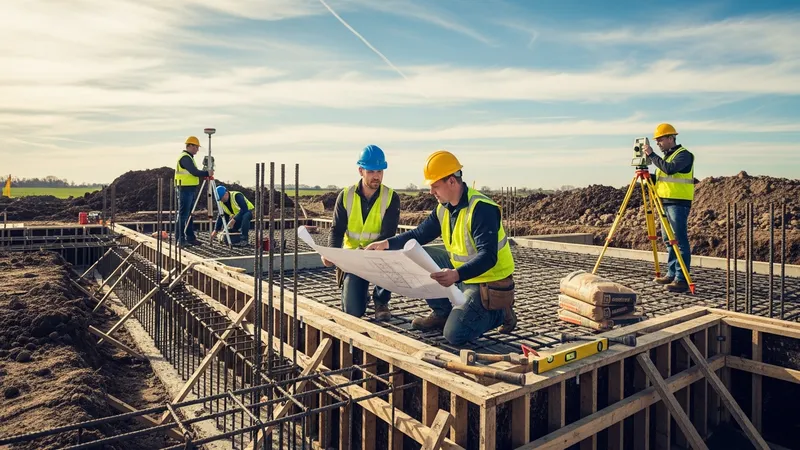
- Footing and Slab Formwork Construction: Installing formwork for concrete footings and slabs is a foundational procedure. Common formwork materials include plywood and steel, installed according to project drawings to achieve correct layout and height. The Portland Cement Association provides technical recommendations for dimensioning. Material and labor costs for this phase may vary widely but are often between $5,000 and $15,000 for an average single-family residence.
- Concrete Pouring and Curing: Once formwork is in place, contractors manage the pouring and finishing of concrete. This step includes quality control to ensure the right mix, proper depth, and adequate curing time as specified by engineer guidelines. References such as the American Concrete Institute highlight curing protocols crucial for durability. Total project costs for the concrete phase may fall in the $10,000 to $25,000 range for typical homes, depending on size and specification.
Contractors commonly employ standardized checklists and documentation during each step. This documentation assists in recording critical dimensions and materials as well as compliance with building codes. Such records can prove important for future assessments and any necessary warranty claims related to construction or material issues that may become apparent over time.
Throughout the process, coordination with local inspectors and stakeholders is integral. Inspections can occur at several stages, such as before pouring concrete and after completion of the foundation, to verify that all codes and structural requirements are met. These formal approvals help confirm construction aligns with both the architectural design and regulatory expectations.
Specific methods may be chosen based on site characteristics. For example, areas with expansive clay soils or high water tables could prompt the contractor to recommend slab-on-grade or raised pier foundations instead of full basements. The rationale for method selection is typically outlined in the project’s design and confirmed through consultation with the homeowner and project engineer.
Foundation contractors apply a mixture of experience, technical standards, and local knowledge to balance budget, durability, and code compliance. Their approach centers on clear sequencing, material verification, and assessment of ground conditions to support safe and lasting residential construction.
In summary, foundation contractors guide each stage of the preparatory and construction process for residential foundations. By focusing on due diligence at each step, they contribute to the long-term resilience of the built environment. The next sections examine practical components and considerations in more detail.