
5G Network Management: Integrating Service Orchestration For End-to-End Automation

Integration, policy, and cost considerations in United States deployments
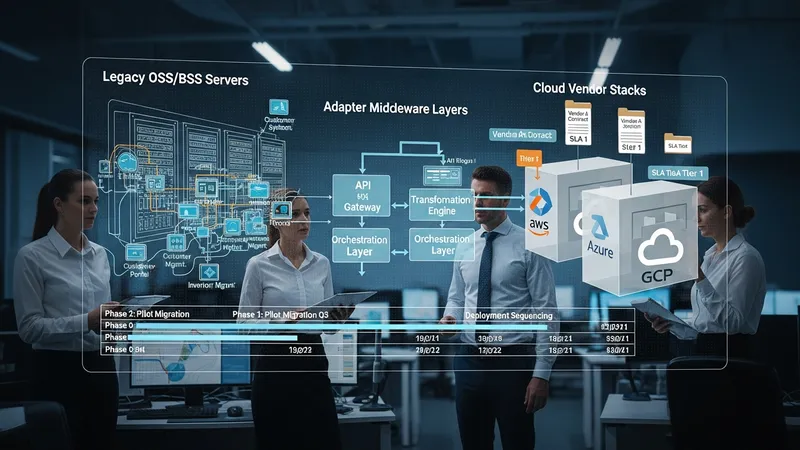
Integrating orchestration into existing operational ecosystems often requires mapping to legacy OSS/BSS functions and procurement processes commonly used in the United States. Legacy systems may expose proprietary APIs or require batch interfaces, so integration efforts frequently include adapter layers and phased migration plans. Procurement and contractual arrangements with vendors and cloud providers can also affect automation architectures, with considerations for support boundaries, SLA terms, and integration timelines that influence deployment sequencing.
Policy and regulatory constraints in the United States influence design choices, particularly for public safety, lawful intercept, and spectrum use. Orchestration flows that affect traffic routing or allocate spectrum resources may need to incorporate compliance checks or predefined policy constraints. Operators commonly consult FCC guidance and industry best practices when defining automation policies that interact with regulated capabilities, and they may maintain audit trails to support regulatory reporting and incident investigations.
Cost factors relevant to U.S. deployments include capital and operational expenditures for compute and transport capacity, licensing or cloud consumption, and integration engineering. Automation can reduce manual operational effort but may also introduce upfront engineering and tooling costs. Typical U.S. planning cycles evaluate total cost of ownership over multi-year horizons and incorporate sensitivity analyses for traffic growth, edge site proliferation, and evolving service mixes to inform orchestration investment decisions.
Interoperability and vendor diversity remain practical considerations: U.S. operators often balance open interfaces with vendor-specific optimizations, and orchestration architectures are designed to accommodate both. Clear interface specifications, rigorous testing, and incremental onboarding of vendors or partners can help manage integration risk. As deployments mature, operators may expand automation scopes and refine policies, maintaining a cautious, data-driven approach to scale orchestration and end-to-end automation across their networks.